Summary for room-temperature hard anodizing Discussion
Room-temperature hard anodizing is discussed as a way to create ceramic-like, ultra-strong anodized surfaces on aluminum, stainless steel, tantalum, and titanium, but the original question is really about where such coatings might be useful. In the excerpt provided, no detailed application list is given; instead, the thread appears to be an open request for ideas from Anna Berkovich of Russamer Lab, who notes the results on aluminum and asks where these surfaces may be required. The page also includes a brief, unrelated site note from Ted Mooney about a Taber Abrasion Tester and project assistance, but no technical answer is shown in the excerpt. Based on the available text, the main takeaway is that the coating is being explored for its very hard, ceramic-like wear-resistant properties, and the discussion is seeking practical end uses rather than reporting a settled conclusion.
Q. While working on titanium hard coat anodizing, we experimented on other alloy types.
adv.
Stainless steel, tantalum, titanium, and aluminum produce ceramic-like ultra strong anodized surface in room-temperature electrolyte.
Where do you think such surfaces can be required? Any ideas are welcome. Attached are the images of aluminum anodized.


Anna Berkovich
Russamer Lab – Pittsburgh, Pennsylvania
(ed. update July, 2025: sorry, Anna has retired)
November 20, 2020
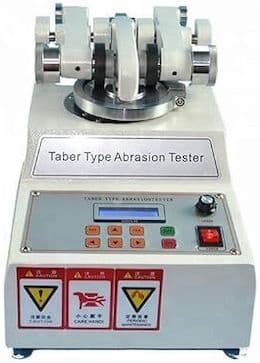
A. Hi Anna. Millions of aluminum parts are hard anodized for the auto industry alone for internal use in various pumps. The question will be whether the room-temperature anodized parts can deliver the same (or good enough) performance, and whether real economies are possible. Hard anodizing at freezing temperatures is not easy — the agitation, contact arrangement, and chemistry must be just right (although some alloys are ‘relatively easier’ or ‘relatively harder’ than others).
My guess is that the two most important tests would be corrosion and taber abrasion, with robustness of the process also being critical.
Luck & Regards,

Ted Mooney, P.E. RET
Striving to live Aloha
finishing.com – Pine Beach, New Jersey
Need quick confidential answers? $25
Need project assistance? $100/hr.
 Hi Ted,
Thanks for suggestions. We already tested the anodized surface. Very durable, very corrosion resistant, passed our own tests and comparison to regular hard anodized surface. We analyzed the surface the chemical composition of the surface. it is glass-like Al2O3 (corundum), extremely strong. Even 50 micron thickness of this corundum anodized surface is better in corrosion resistance of 200 micron hard anodized aluminum. Willing to conduct laboratory tests if interest occurs.
Anna Berkovich
Russamer Lab – Pittsburgh, Pennsylvania
(ed. update July, 2025: sorry, Anna has retired)