
| Search our quarter-million Q&As |
Home of the finishing HOTLINE since 1989
-----Standard black(ish) finish on hot rolled steel
2005
Please excuse me if this question is too simple for this forum, but I am new to metal finishing.
I am wondering what the standard blackish finish I see on hot rolled steel is. Whenever I've bought hot rolled steel from a metal supplier (usually Metalexpress, but even stuff at home depot has the same coating) it has come coated with a black finish, presumable some sort of corrosion resistant coating. What is that stuff? And, is there a way to apply that finish to small pieces without too much specialized equipment? First I thought it may be a black oxide finish, but now I am not sure. Any experts out there can help me with this?
Thanks,
Hobbyist - Baltimore, Maryland, USA
2005
The basic hot rolled finish is due to "fire" scale (an Iron/Carbon/Oxygen mix) that is left on as a cheap and quick corrosion barrier.
Fire scale is usually stiff and is produced in an environment where there is abundant heat (1200°-1500°f) and any amount of oxygen. Your average fire scale layer isn't thick enough to be a serious barrier to corrosion, that and it will rust itself.
Take a look at http://www.askzn.co.za/tech/tech_finishes.htm for a decent list of industry standard steel finishes.
If you do intend to try for a layer of scale over a steel object you need to know a few things, I'll lay out what I think you'll need to know.
Firstly, you need to look at the size of your project, how big is the object you're looking to put a layer of fire scale on? Small things
(I'd say up to 1' by 1') you can coat with fire scale pretty easily, get some firewood, a leaf blower, some large pipe (not plastic) and a shovel.
Dig a deep and wide hole, lay an air pipe from your leaf blower to the sidewall of the pit. It will be better if your pipe is pointing off to the side a lot (you'll be trying to get a cyclone thing going).
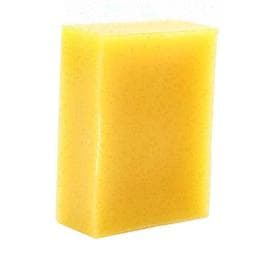
Let it burn for awhile, maybe an hour or so then turn off the leaf blower and let the thing cool till the next day.
It should be cool by the next day, take a wire brush to get the extra flakes of scale off the object, there will be a good deep layer of scale on the steel that won't flake or chip easily. I would suggest a beeswax ⇨
or a floor wax (not a sealing one, one for hardwood floors) to keep the thing from rusting.
If you have any more questions on doing this let me know here.
Marc BanksBlacksmith - Shiloh, North Carolina
Q. Is fire scale on the inside of a tea kettle dangerous to be drinking the water from. I got some a year ago & have continued to drink my hot water from the same kettle and stared wondering if it is imparting something dangerous to my body every time I boil water or is it not a problem at all?
Thank you in advance for any light you can shed on this subject.
Suzi
- San Carlos, California USA
August 12, 2012
Sorry! Finishing.com is temporarily Read-Only.
Ted Mooney is retiring but I have several offers to take it over.
We're working hard to make sure we find it the best new home.