
| Search our quarter-million Q&As |
Home of the finishing HOTLINE since 1989
-----I think I anodized my cathode, maybe?
2004
I am experimenting with *very* small scale anodizing and have hit a small problem. I setup a small epsom salt [affil link] bath, and hooked up a 9v battery to the bath. I hung a small (less than 1 sq in. ) off the anode, to be anodized, and a larger sheet of aluminum foil off the cathode. I powered everything up and the pieces started bubbling (the anode had few bubbles, the cathode was covered with them.
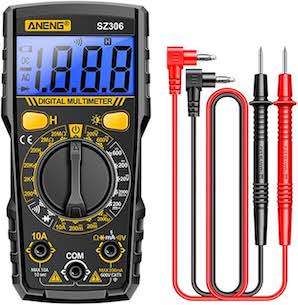
I wasn't sure if it was working at all, so I left it in for more than an hour and when I came back, the bath had a yellow tint to it (aluminum oxide?). Both pieces had a dull shine to them, the anode also had a slight yellow tint to it. I took both pieces out and tested them with my multimeter. Here's my problem... the piece I was trying to anodize became MORE conductive (the half of the piece that wasn't in the bath had more resistance) and the aluminum foil lost all conductivity (it read infinity ohms). The battery isn't backwards, or anything like that. Did I not leave it in for long enough? Is my setup not powerful enough? Any info would be appreciated.
Anthony Johnsonstudent - Greenfield, Massachusetts
I have never heard of anodising using an Epsom salt bath (magnesium sulphate). Furthermore, I suspect you have not got the temperature anywhere near correct. Anodising is carried out in cold sulfuric acid. I am not sure what you have actually done, but I suspect you have made the "anode" more conducting by way of it being wet with a highly conducting electrolyte. The "cathode" could have almost anything on it, but it sounds as if you have put down an insulating layer. I suggest you consult this webpage and look up "anodising" and get some more guidance to the technique.

Trevor Crichton
R&D practical scientist
Chesham, Bucks, UK
2004
Sorry! Finishing.com is temporarily Read-Only.
Ted Mooney is retiring but I have several offers to take it over.
We're working hard to make sure we find it the best new home.