Curated with aloha by
Ted Mooney, P.E. RET

Home of the 'finishing HOTLINE' since 1989
ABOUT THIS SITE
- Finishing.com is the home page of the finishing industry ® -- a place for anyone interested in metal finishing / surface finishing to get info, enjoy the camaraderie, and have some fun.
No "enshitification of the internet" here: no registration, passwords, 'premium content', paywalls, 'pop-up' or 'sticky' ads, or AI. The world wide web which you used to enjoy simply "surfing" remains alive and well at finishing.com.
We try our best to make finishing.com not just a helpful site -- but friendly and fun! No profanity, ad-hominems, or spam, just aloha.
Contents of the site
- Our Home page is a site map / table of contents of the site. Our most popular area is the 'finishing HOTLINE' where everyone from hobbyists to the world renowned experts of the finishing world discuss technical issues while enjoying camaraderie and having a little fun since 1989!
We also feature a technical library and FAQs about metal finishing.
Affiliation
- Like the media of the old days, Finishing.com, Inc. is an independently owned small business. We've never sought nor accepted government grants or association stipends. Supporting advertisers paid its cost over the years, but in view of the current AI landscape. we've suspended billing anyone for advertising; rather, affiliate links to Amazon, eBay, & other on-line vendors make the site possible.
History ... and Preserving It
- We've been continuously on line since February 1989, starting as a dial-up BBS.

Extracts from our Hotline-Letters page were printed monthly in Metal Finishing magazine (an Elsevier Science publication) as the "Heard On the Hotline" column for over 10 years. When the WWW became publicly accessible in 1994, we moved there as the first WWW service for the finishing industry.

In May of 1995, Ted Mooney & Tom Pullizzi incorporated finishing.com. After guiding the site through its formative years, Tom moved on to become a high school science teacher. Bob Dylan & George Harrison said it best, Tom: If not for you, I wouldn't have even found the door.
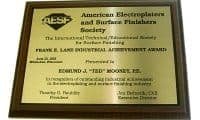
In 2003, the American Electroplaters & Surface Finishers Society honored Ted with its Industrial Achievement award for the establishment of www.finishing.com.
We strive to preserve the seminal idea of open sharing of knowledge that launched the web, honoring history by preserving the postings from industry luminaries who have sadly passed on, while fighting relentlessly to update broken links and keep everything current. We constantly take advantage of the wonderful Wayback Engine on The Internet Archive to offer access to important info which the original sources no longer maintain.
Contact Information
- Ted Mooney, P.E. RET is president of finishing.com.
- Our address is:
- Finishing.com, Inc.
- 523 Springfield Ave.,
- Pine Beach, NJ 08741
- email: [email protected]
- Our address is:

If you need confidential help, or public forum assistance doesn't meet your needs, see our Consultants listings, or Ted's offering of private help.
Please appreciate that thousands of our 250,000 posters would prefer to phone for help rather than publicly posting, and the only polite way we ever found to address the resulting impossible number of phone calls for private help is to charge $25 for 15 minutes of personal telephone help. Please publicly post at no charge; but if you have confidential issues or want private help it is a phone call away.