
-----
Stainless steel laser etch and passivation
Quickstart:
Mechanical operations done on stainless steel can leave tiny particles of iron on the surface which will rust and act as seeds for pitting or further rust. "Passivation" of stainless steel is an immersion process into nitric or citric acid for removing that iron presence and enriching the surface with chromium oxides. Questions & problems arise when combining passivation with laser cutting or marking operations.

this text gets replaced with bannerText

Q. Trying to clean/passivate laser cut hypotubes that are 0.066"+ in diameter. Tried both citric and nitric acid for roughly 45-60 minutes and no luck. Pre-cleaning being done with water in an ultrasonic. Any suggestions? Thanks,
RJ- Massachusetts
December 13, 2024
Tip: This forum was created to build camaraderie through sharing of tips, opinions, pics & personalities.
The operator & readers who are here for that often won't engage with anonymous posters.
A. Hi RJ,
adv.
Please contact me directly for consultation on how to passivate parts without destroying laser marks.

Anna Berkovich
Russamer Lab - Pittsburgh, Pennsylvania
(ed. update July, 2025: sorry, Anna has retired)
January 9, 2025
A. RJ,
Could you please explain what constitutes "no luck" and what process approval criteria were not met by the methods you tried?
I do have an experience with laser-cut small-diameter tubes. The issue presented to me was that they left a grey residue when wiped on a clean cloth or paper towel. I believe this to be analogous to similar issues encountered on the inside of large process tanks after passivation, and I believe it to be indicative of the presence of fine metal particulate of the stainless, a sort of "metal sawdust" if you will, left behind from laser cutting or polishing operations.
Though this type of thing gets presented to me as a "failure of passivation", I submit that the purpose of passivation is to improve the corrosion resistance of the surface, and this is clearly not corrosion (nor it is residue "caused" by the passivation acid, and is no doubt present prior to the passivation treatment). Is it generally incumbent on the personnel doing the passivation to ensure the stainless surface is clean FIRST, i.e. one does not rely on the passivation process itself to create a clean surface, only a surface with higher corrosion resistance, and indeed, a dirty surface can impede the passivation treatment. (This is not to say that cleaning and passivation cannot be performed together under certain circumstances, but only for certain levels and types of surface soils, and metal particulate like this is particularly stubborn, it does not just come off from a quick wash in your average degreaser.)
I have a couple of papers that, in part, address the particulate issue when it comes to the inside of tanks. One of them claims that repeated pressure washing and/or wiping/scrubbing of the surface is the only thing for it, while the other suggests that scrubbing with cationic surfactant tends to be effective (allegedly due to breaking the electrostatic charge that holds the particulate to the surface).
As for the tubes I had, I found that the residue lessens over time with repeated wiping, and could be avoided altogether with EXCESSIVE time in an ultrasonic cleaning tank (I don't recall exactly, but I expect it was an hour or longer to fully prevent the reside from appearing while wiping.) Perhaps the time needed would be reduced when using a cationic surfactant, as per the aforementioned paper.

Ray Kremer
Stellar Solutions, Inc.

McHenry, Illinois
⇩ Related postings, oldest first ⇩
Q. Hi,
I am having trouble passivating small laser marked components made of 420F free machining stainless steel. When I receive the parts from the vendor that does the marking, the marks are dark and smooth (just the way my customer wants them). Unfortunately, upon passivation one or more of the following problems often occur:
a. The darkness (from the carbon that the laser brought out of the alloy?) fades or disappears.
b. Rust appears at the marks.
c. Stains appear elsewhere on the parts.
d. Surface damage to the part occurs from acid attack.
I rarely experience any problems with 420F parts that are not laser marked.
My passivation process is as follows:
1. Ultrasonic cleaning @ 140 °F in a 5% solution of Loctite "Natural Blue" for 30 minutes.
2. Rinse in R.O. water.
3. Soak in a 5% sodium hydroxide solution, 30 min. @ 170 °F.
4. Rinse in R.O. water.
5. Soak in a 50% nitric acid solution , 30 min.@ 130 °F.
6. Rinse in R.O. water.
7. Soak in a 5% sodium hydroxide solution, 30 min. @ 170 °F.
8. Rinse in R.O. water.
Any ideas out there that won't cost a small fortune? Thanks,
Mike Kiser- Bloomington, Indiana, USA
2000
A. Hi Mike,
Laser marked colors are generally made of inorganic chemicals that are soluble in acid solutions. As a consequence, the colors will disappear during etching. Furthermore, some of the dissolved color components are able to attack metals.
In general, laser marking operation follows surface finishing. You should be able to get rid of this problem by changing the process.
Ling
Ling Hao- Grand Rapids, Michigan
A. adv.
We have had great success on this application with our CitriSurf 2250, a citric acid proprietary blend that provides much improved corrosion resistance and lower reject rates for many surgical instrument manufacturers and orthopedic manufacturers. It is a much easier process, yet produces improved results.
However, we have also found that any laser etched surface is going to be the weakest link on the surface, and a potential corrosion site. We have recommended to some manufacturers that they etch a little deeper with the laser and then completely remove the black oxide. This produces an "engraved" surface that looks excellent and has maximum corrosion resistance long term. This can all be done easily.
Please contact me for more details or if you want tests run.


Lee Kremer
Stellar Solutions, Inc.
McHenry, Illinois
A. We mark medical and aerospace components daily, and have not heard of this problem with regards to the laser marking we provide. It is possible that your supplier is putting a very fast pass with the laser to achieve price points required. If you allow the beam to dwell longer by slowing down speeds or putting multiple passes on product the mark will be blacker and will not go away.
Jeffrey Feinberg- Chatsworth, California, USA
Multiple threads merged: please forgive chronology errors and repetition 🙂
Should I Passivate Before or After I Laser Mark my Low Grade SS Parts?
Q. Should I passivate before or after I laser mark my low grade SS parts, or not passivate at all?
The steel I have is such a low grade of Stainless that technically I can't call it stainless. I'm told it might be close to a 400 series.
We received our first parts with a brown laser mark and have found some rust on the laser marks.
If I passivate the parts after laser marking will that solve my problem, will I loose the laser marking after passivation? Thanks for your help Gary
Gary Gillis- Howell, Michigan, USA
2000
A. If you are getting rust more in your laser mark, than on the rest of the part, I would say that you should passivate after the marking. I don't believe that you remove much material during a proper passivation. But at any rate, you should be able to easily test some scrap parts before going to full production with the new process. -tom


Tom Pullizzi
Falls Township, Pennsylvania
 Thanks for the suggestion Tom, I will give it try!
- Howell, Michigan, USA
A. adv.
Gary, the surgical instrument industry has attained dramatic reduction in corrosion and rejects due to laser etching with the use of CitriSurf products. They passivate AFTER laser etching, and depending on how you do it (and the grade of stainless) you can either leave the dark etch mark or remove it to get an "engraved" look.
Either way, you will improve your corrosion and rusting resistance of the laser etch by passivation. Unless you remove most of the dark material, it will always be the weakest link in the part, but passivation with CitriSurf will give you considerably improved results. Lee
Lee Kremer
Stellar Solutions, Inc.
McHenry, Illinois
Q. I am a designer of Medical devices/instruments. The primary material in use is stainless steel, 17-4 PH heat-treated to H-900 condition.
After laser etching part numbers, we have the instruments passivated for corrosion resistance.
After passivation, our laser etching is all but non-existent. If we laser etch before passivation, the area of laser etch corrodes after autoclaving.
Any suggestions on how to finish for corrosion or laser etching with reference to technical documents would be appreciated
Anthony Rubino- San Diego, California
2001
A. Anthony:
This is a typical problem. The laser etched area is the weakest area on the parts and must be passivated to prevent rusting in the etched area. However, it can be very difficult to get the etched area passive without removing ALL of the darkened color used for identification.
adv.
We have had great success with our citric acid formulations in producing excellent corrosion resistance in the laser etched area without removing the color. Many surgical instrument companies have gone to this system because the amount of problems and rusting are significantly reduced compared to nitric acid passivation.
Let us know if we can help you.
Regards,
Lee Kremer
Stellar Solutions, Inc.
McHenry, Illinois
Q. I would like to know if Anthony has found a solution to the problem as I have the same problem.
Bill Buttermore- Cincinnati, Ohio
May 16, 2008
A. Passivation of stainless steel that has been laser etched must be done with a different solution of Nitric acid. If you have found this problem to be intermittent, it is due to the variation of the chromium content in the SS. For the laser etch to hold the chrome content must be above 16%. 17-4 stainless rides right on this line. Any washed out laser etch issues will have lower chrome then this. If you are experiencing these problems, you are probably using a nitric 2 bath. The solution is to use a nitric 1 bath which is a lesser concentration of acid or to use citric acid .
Nathan Meyer- Avilla, Indiana
440A Stainless Steel, Laser Marking, Passivation and Rust
Q. We use 440A Stainless Steel for Medical Devices and they have to be laser marked and Passivated. We have a problem of RUST where we do laser marking.
Jitendrakumar Shah- Piscataway, New Jersey
2003
A. If these medical devices are not required to be sharp, they can be passivated with strong film by high-voltage technology. Steel can become a little yellow if you desire the passivating film to be thick.
Anna Berkovich
Russamer Lab - Pittsburgh, Pennsylvania
(ed. update July, 2025: sorry, Anna has retired)
A. The reason for rusting in the laser marked areas is that an insoluble oxide of some kind has been formed that does not allow the acid to see the substrate. Remove the oxide before passivating and all will be well.
Dan Weaver- Toccoa, Georgia
A. Depending on quantities you can laser mark with Cermark or Thermark. The ceramic based solution is fused to the metal by low powered laser (CO2, Galvo ...) You will obtain a super crisp and very black mark. Both companies working on other colors for metal marking as well.
We use this method for underwater equipment. It is also used for marking of pacemakers and other medical products. Due to the process of applying the paint, drying time and laser time you will have to evaluate the efficiency for your application. For general passivation of stainless after welding we use phosphoric acid which might be referred to as white passivation.
- Miramar, Florida
A. I've had the same problems on some of my 440c medical reamers. It appears that the laser marking stays under the passivation and causes little rust spots after sterilization. We solved the problem by passivating before engraving, laser marking afterward, and white passivating them at last. After those treatments, not one of our other instruments rusted.
Marc Thebo- Canada
? Marc,
What is "white passivating"?
Jon Quirt
- Minneapolis, Minnesota
This white passivation is the name of a process which one of my suppliers gave me in order to explain why there was no rust on our instruments and there was rust on their previous instruments. I tried asking them where and how they did it and they are still hazy on the subject. I'm still trying to figure out if there are any standards or guides about "white passivation".
Marc Thebo [returning]
- Canada
I have never heard of white passivating. Perhaps they use it to sum up other passivation included steps; sodium dichromate post passivate, maybe hot caustic pre treatment. I would ask Lee Kremer of Stellar Solutions [a finishing.com supporting advertiser] if he has heard to it. Lee has some great citric acid based products, but word of caution the citric passivates are so good they will remove or greatly lighten laser mark. Other technology I have seen is a ceramic glaze applied prior to laser mark. The laser frits the glass and the resulting corrosion resistance is very good. I suggest a internet search for "Thermark" I think they were working on FDA approvals but I'm not sure.
Jon Quirt
- Minneapolis, Minnesota
Q. We are having a part laser cut out of 304 SST with a #4 finish on one side. The part has 1/4" grooves 1/2" apart going through it. The laser cutter is using nitrogen, and is using SST slats to support the part. After 4 hrs in a salt spray cabinet, the part starts to show rust in the grooves. (but not on the perimeter of the part). Does anyone know what is causing this problem? Why is it not on the perimeter? And is this something that will require passivation, or is there something else that will get the iron off of the material?
Greg GroteFour Star Plastics - Brandon, South Dakota, USA
2003
Multiple threads merged: please forgive chronology errors and repetition 🙂
Q. One of the responses on this subject mention the removal of the laser mark using citric passivation. Does anyone have suggestions on how to prevent removal? Is this a consequence of time in bath, citric concentration, temperature?
Dell Parr- Memphis Tennessee
April 2, 2009
A. My name is Qasim Raza and I am from Pakistan. We are a manufacturing company of beauty care stainless steel products. I would like to tell you something about that what is Passivation.
Passivation is a special process we do during manufacturing to avoid rust.
For Passivation we dip instruments in boiling water mixed with some special liquid/chemical. Then the instruments boiled for 24 hours and after this we allow all the instruments to cool itself in the same water. The cooling process will take more the 12 hours.
After this we check all the instruments very carefully and if we find any problem in the instrument we remove it and finally send it to other manufacturing process.
I hope this stuff will help you to understand about Passivation. if any one have any question please let me know.
Best personal regards,
AunAilya Beauty Company - Pakistan
Q. Related to this, I am trying to figure out how one can maintain their laser marking/engraving while rebrushing the steel? Laser markings tend to be more shallow than traditional engravings and more importantly hold the dark burn color in the engraving which in this case should be preserved.
Kerma Hoyry- Helsinki, Finland
February 11, 2013
A. Hi Kerma. I don't think this can be done. "Brushing" is actually done with sandpaper/scotchbrite, and it physically removes the metal and the laser marking along with it. It is theoretically possible to not brush the engraved area, but that sounds impractical in reality. I think you may need to do the engraving after the brushing.
Regards,

Ted Mooney, P.E.
Striving to live Aloha
finishing.com - Pine Beach, New Jersey
Ted can be retained for immediate
answers or long term project help
A. I'm not 100% sure of what your problem really is? Ted covered some ground, but surface finishing is a matter of degrees. Meaning, depending on the energy application and or force used you can achieve different results. Another factor is the size and shape of the part and the hardness of the material. Not know the particulars, it is hard to make a good recommendation.

AF Kenton
retired business owner - Hatboro, Pennsylvania
Multiple threads merged: please forgive chronology errors and repetition 🙂
Q. We are currently in disagreement with our customer over whether the brown oxide from laser etching on 17-4 Stainless Steel should remain after citric acid Passivation to a surgical company's spec. Tools are used to tighten and place screws and pins into the human body. We say etching should be clean after processing, customer wants lettering to be visibly dark.
Process; (1) Glass bead tools to mil spec. (2) Customer picks up parts and sends out to laser etch letters and numbers onto parts. (3) Parts are returned to us for citric acid passivation and test per Koslow Scientific Testing Instruments [a finishing.com supporting advertiser] method. Surgical company specs say to specifically test spot near working tip and on lettering. Parts fail Koslow test on lettering, in fact the test itself removes some dark lettering. Customer takes parts without certs. because project is running late. Last load 80% of smut was removed from lettering and we are now blamed for ruining the parts! Other than smut removal, part has not changed dimensionally or surface texture wise.
It is our opinion the glass bead blast before etching is to provide a contrasting background for the lettering after passivation. Also when parts pass Koslow test no smut is visible in lettering, etching is shiny compared to glass beaded surface. We do not want to lose this customer but he is dictating his needs contrary to the spec. and will not allow parts to form passive film before testing. Wants them now!
Paul Szymanowskiplating - Erie, Pennsylvania, USA
2004
A. Each company in this industry has different requirements, but usually they want the discoloration of the laser etch to at least partially remain in order to be more visible for doctors and nurses in hospitals, etc. This can still be attained and get good passivation with the correct citric acid formulations. If you are using straight citric acid it is probably not possible.
Significant reductions in corrosion of the laser etch is possible with the correct formulations without removing the mark. This is being done on millions of parts.
adv.
Contact us if you need further information.
Lee Kremer
Stellar Solutions, Inc.
McHenry, Illinois
Q. We are a medical manufacturer of instruments and implants. We typically laser etch 17-4, 440C, & Titanium.
We have a reoccurring problem with etching. The etched surface will corrode (rust) after nitric passivation treatment. Re-polish /buff, cleaning and laser etching again does no good.
Does anyone have any knowledge on this issue dealing with laser etching and passivation?
Medical Manufacturer - Fort Wayne, Indiana USA
2005
A. Gene, I've been laser marking Orthopedic instruments made from 300,400 and 630 series of stainless steels for 15 years. The majority of these parts were passivated in 30% by volume Nitric acid at room temperature for thirty minutes. There have been few problems with this process. However, I have had problems recently with citric acid passivation. Details of laser marking parameters versus passivation too lengthy for this reply.
Ron Stephens- Cordova, Tennessee, USA
A. Re: laser marking on SS. What type of laser? Yag or diode pumped? In general, the darker the laser mark the more likely it will rust. A good question to ask is what gives laser mark its dark appearance? A nice rich layer of iron oxide.
I once upon a time helped with a study on surgical tools (17-4). In a humidity cabinet I would see the nice dark laser mark drip red rust in a matter of hours. We played around with means and methods and concluded the lighter laser mark to be more corrosion resistant. I had some idea of electroetching letters but was trumped by a company called Thermark. They have or had a ceramic glaze that was brushed on prior to laser mark. The laser fritted the glass and the resulting laser mark was damn near corrosion proof.
- Minneapolis, Minnesota
A. Strange that someone has success with nitric acid and not with citric, but maybe the conditions are different.
adv.
We have many customers who have switched to citric passivation totally BECAUSE of vast improvements in corrosion of the laser mark compared to what they used to get with nitric acid.
If the right laser and enough power is used you can get an excellent mark that will passivate very well without being removed by the passivation or rusting in the autoclave.
Lee Kremer
Stellar Solutions, Inc.
McHenry, Illinois
Passivation and Laser Cutting/Stamping of Stainless Steel
Q. We have a requirement to get some small stainless parts fabricated and passivated from a 300 series stainless steel. They are 0.012" thick and about 6" x 1".
I know that standard theory tells me to passivate last but since these are virtually sacrificial plates to protect the underlying structure I am not too worried about the passivation as much of it will get damaged in service. However it has to be done as we only have limited freedom in the design. The important question is would these pass the copper sulphate
⇦ on
eBay or
Amazon [affil link] test from AMS2700 after being laser cut or stamped from a sheet if it were passivated first.
We are just trying to save on racking time and cost.
Thanks for any help.
Chemist - South Wales, UK
October 14, 2009
A. The answer is very simple, since stamping after passivation leaves you with not passivated surfaces, meaning free iron, your piece will probably not pass the copper sulphate test, and you will see a nice copper edge on your piece.
Bo Kønig- Odense Denmark
A. Oftentimes 300 series parts will pass copper sulphate even prior to passivation unless there is some iron surface contamination happening during the manufacturing process. Stamping is the kind of thing that can cause this contamination, but neither is it a certainty. The heat affected zone from laser cutting will be more susceptible than the rest of the part until and unless it is passivated, but it depends on the grade and the laser settings as to just how bad that will be, i.e. if it might still pass copper sulphate.
I think you can't really know without doing some sample pieces and actually performing the copper sulphate test.
I should say that I can't endorse the sort of "cheating" you are thinking of doing, but you did already admit to knowing better. Unless these pieces are in service in a harsh corrosive environment it may not really matter anyway.
Ray Kremer
Stellar Solutions, Inc.
McHenry, Illinois
Q. I just started a new laser etch process (YAG Laser) for marking on 304 stainless steel, the depth is about 0.05 to 0.1 mm, after the laser etch, I found "brown layer" on the surrounding area, any chemical can remove this "brown layer"?
Thanks
Production - Singapore
October 23, 2010
Q. We use the Citrisurf citric acid product and have good success for the most part. Some items do very well, and some do poorly. It must be the Chrome issue brought up by another answer. It is a bit of an art to passivate w/o removing the etch. We dipped them in a heated bath for awhile, but had some instruments that didn't fair well. We primarily use the Gel form and it works well. What I suspect is the use of highly alkaline cleaning solutions being used by hospitals causing the staining. There is very little actual Rust. I'm looking into just Acid etching now. Anyone need a really good fiber marking laser? What concentration of Nitric acid was being recommended? I wanted to try that on a few particular instruments that the Citrisurf seems to dislike.
Joe B Blacksurgical instruments - Tucker, Georgia, United States
August 3, 2012
Q. Hello all, trying to find a new way to engrave stainless steel plates with our LS900 laser engraver (which we use for bracing plugs on our electrical equipment). We have already been using non-reflective spray to then burn a top layer of text onto the stainless, but this tends to rub off easily. I was considering colored passivation, but was curious as to whether I could burn through with our 60W laser (and whether it would be visible enough). Has anyone tried this or have any suggestions? Thanks.
Gus Germenis- Houston, Texas, United States
February 25, 2013
Q. Hello
We use Stainless Steel (Nirosta®) for Medical Devices and they have to be laser marked. We have a problem of corrosion where we do laser marking. Somebody has the same problem. I conduct extensive research in that issue. Probably somebody had the same problem with the laser. I am reading here that people doing the passivation before the laser, then how create the corrosion protect after that? Is it wrong to do the passivation after the laser?
Thanks,
- Tel aviv, Israel
May 9, 2013
A. Production is not always set up after the most correct chemical point of view. Newer the less stains from laser markings can be removed either with spot passivation or if heavy stains, do some spot pickling before passivation.
Do remember that the purpose of laser marking might be to make dark colored marking and those marking are a thicker layer of chromium oxide. Try for instance to make a test.
You will not find free iron.
- Aalborg, Denmark
Q. What do you mean in "spot pickling"?
Michael Rachilevsky [returning]- Tel aviv, Israel
A. Sometimes, the entire work piece is to big for the process tank, and one will choose only to treat the "problem"; that is known as spot pickling or spot galvanizing, tampon plating, and probably many other names.
Bo KoenigConsultant - Aalborg Denmark
How to mark polished stainless steel?
Q. I sell polished stainless steel tools online. These tools will be used with massage oil/creme and cleaned with alcohol regularly. Currently they are CNC engraved.
I would like to be able to offer personalization (customer name put on tool) as an option. I saw some laser cutters/engravers on eBay for under $500 and thought that would be great, but found out they will not work. Then I found they "may" work if I used some liquid ink (Ceramark/Thermark or something similar) and had the laser go over it a couple of times. I then looked into lasers with enough power to engrave/etch directly in one pass, but they seem to cost about 20K. Way more than I can spend and also laser pricing is well hidden by the manufacturers ... you need to contact a distributor with all your personal info just to see if the price will fit my limited budget.
As I plan on charging $20-25 for this service that limits the cost of hardware. I have also seen the Etch-0-matic but not sure it lends itself to making a lot of unique marks. How can I permanently mark customer names on my products from home?
Thank you in advance,
Mike
- Caldwell, Idaho USA
February 28, 2015
Q. In desperation I finally found this board, and and really hope someone can assist me. And have ready though all the previous threads and it seems like a general problem all round.
We engrave medical bracelets for a client (stainless steel grade 4) and currently use a local supplier of "etching paste" which they will not reveal the contents of. The cost of this paste is almost 1/2 the price of other like Thermark LMM14 (exchange rate etc etc) and lately we have had a lot of comebacks with the black mark wearing off. I read in a previous post of a Thermark bonding agent that "frizzles" it as the gentleman explain it but cannot find this on Thermark website. Do you have any more info on this perhaps?
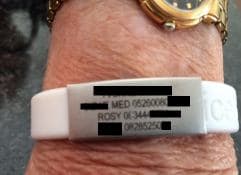
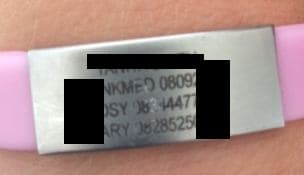
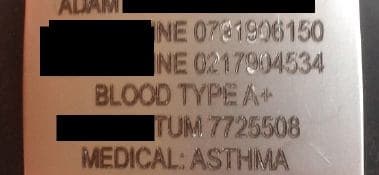
Also, as this is an item worn on the wrist and is subject the quite a lot of surface wear (particularly athletes or people in wheelchairs who constantly brush against the chair as they move about), obviously there must a limit to the lifespan of these items. Is there any industry standard indicating such limits that I can impart to my client?
Any help will be much appreciated.
Charlie
laser engravers - Cape Town, South Africa
May 10, 2015
A. I have been etching all kinds of surgical instruments for almost a year due to the coming UDI by the FDA. We provide total instrument tracking solutions to hospitals.
We have three YAG lasers (Rofin 1064 nm) and this is my experience with Citric passivation and marking:
You can engrave, etch or aniline any material, coming to stainless steel this are my findings --
1 We have tried Citric passivation with good results
2 We designed an ultra fast sensitive 2D camera so we can make really small marks without stressing or removing much material of the instrument
3 We usually run tests with Hydrogen peroxide, which is more aggressive, to see the results of passivation; citric does a good job.
Rule of thumb, marks must have a good contrast black to be easily read by scanner. I have been seeing in SPD (Sterile Processing) people getting frustrated because they cannot read marks.
4 Laser set up is fundamental; power, frequency, focus play the ultimate results.
Really not much literature online to learn this but I have been investing a few months perfecting the DataMatrix marks.
instrument tracking - Winston-Salem North Carolina
A. I think in general, going for a deeper etch gives something that you can be sure will hold up over the long term. However, most laser marking on stainless is in the medical industry for surgical instruments, and I am told that in the dimly lit surgery room, the very dark black high-contrast mark is key. There are tricks to this, but it always comes down to some trial and error as well.
I think for something like medical ID bracelets, for the most part something with a deep etch would be okay even after the black starts to wear off.
Ray Kremer
Stellar Solutions, Inc.
McHenry, Illinois
Q. Can anyone share the recommended process cycle for UDI? is it recommended to passivate the surgical and dental instruments after Laser marking? I would highly appreciate if anyone can provide the process cycle for the same.
Sobhan Aslam
- Siakot Punjab, Pakistan
October 1, 2020
Q. Hello, We are medical device producer, our products surface are uneven so, after laser marking we cannot make proper passivation; then we have rust on marking area. So could you please share your experience for passivation of SS after laser marking?
Thanks
Engineer - Izmir Turkey
July 12, 2021
A. Arda,
Passivation is done with an acid, generally a dip bath or a paste version, so I'm not sure why you say an uneven surface is causing a problem for you.
You do need to passivate after laser marking on stainless, though some trial and error is often needed to determine an ideal process time that does not damage the mark itself.
Ray Kremer
Stellar Solutions, Inc.
McHenry, Illinois
A. Arda,
Passivation of stainless steel after laser marking can sometimes be challenging and there is a different method. In some cases you would want to passivate before laser marking and do a citric gel passivation after laser marking; I have also found that nitric with sodium dichromate passivation works well on 300 series stainless steel to keep the laser marking from lifting.

Mark Battles
Plymouth, Minnesota
Q. Hello, We have a rusting issues around laser marks with our stainless steel (4057) made medical product. Before sending our Medical Drill to "Laser Operation" , we use passivation with nitric acid (%20) due to other operations , but after the laser we don't passivate because we lose the laser markings. And not passivating the product causes the rusting problem. What kind of passivation do you suggest for us? We currently use nitric acid (%20) for 30 min at 125 °F (50-55 °C) and also laser lines are in the curved space , does this change the type of the passivation?
Ak TolgaliEngineer - Turkey
August 5, 2021
A. Ak,
Post-laser mark passivation is often done using citric acid formulations. There is still the issue of removing or otherwise ruining the laser mark, but it happens more slowly than with nitric acid, so with some trial and error you can work out when to remove the parts from the citric bath to have better corrosion resistance on the marks.
Ray Kremer
Stellar Solutions, Inc.
McHenry, Illinois
Q. Hi Team,
From a medical device manufacturing company, Do we need to validate stainless steel (Irrespective of grades) post passivation test after laser marking? Since ASTM A967 touches based on Chromium % of stainless steels. Since we are not getting same result in the with the same process parameters and same Chromium % steels. Any experiments or support to conclude and follow a test post passivation after laser marking??!!
Private employee - Perai, Pulau pinang, Malaysia
December 23, 2022
A. The laser-etched area has iron oxides on the surface. These oxides makes the laser-etched surface to be visible to the optic devices. It is important to leave the laser-etched surface not impacted with passivation procedure. Both citric, nitric and hydrogen peroxide solutions, if staying longer than 20-30 seconds, will begin to clear the laser-etched surface.
Passivation instructions:
Degreasing and rinsing.
Prepare the modified passivation solution:
5-10g/l (85% Phosphoric acid
0.5 g/l NaCl (kosher salt)
1% Hydrogen peroxide solution.
Use plastic mesh to submerge single-layer parts into room temperature passivating solution. Hold for 20 seconds, remove, rinse with tap water. Submerge into solution of 5% sodium carbonate, rinse again. Submerge into rinsing tank again and check that pH is neutral. Submerge into the tank with deionized water. Dry. If parts are in form of tubes, make sure all water is dried out from the tubes.
Be sure that after passivation the SS parts are rinsed in deionized water and dried completely. Humidity destroys 420SS during extended storage time. Make sure that the storage area is dehumidified.
Also take special precautions when packing that the parts do not touch each other, in order to prevent damage to passivated film.
Anna Berkovich
Russamer Lab - Pittsburgh, Pennsylvania
(ed. update July, 2025: sorry, Anna has retired)
A. I would say that in general, "do we need to" questions are a matter between you and your customers. ASTM A967 for example is not written with medical applications in mind, though other medical devices standards do refer to it.
If it were up to me, I wouldn't worry to much about "validating" the passivation of a laser mark on stainless. Run it in a citric acid process and cut the time short if need be to prevent the laser mark from being ruined. If you really want to run a test, in my experience the best one for laser marks in the boiling distilled water immersion test (listed in A967 and ASTM F1089).
I'm not sure what you mean about chromium % unless you're looking at the copper sulphate
⇦ on
eBay or
Amazon [affil link] test method. copper sulphate is very prone to false failures on laser marks, mainly because you can never really passivate a laser mark to the same degree as the unmarked steel.
Ray Kremer
Stellar Solutions, Inc.
McHenry, Illinois
Q, A, or Comment on THIS thread -or- Start a NEW Thread