

Metal finishing Q&As since 1989
-----
Electropolish finish determination
I am looking for a way to quantify the appearance of an electropolished surface. Generally, in the past, designers call out a surface finish (micro) to determine the electropolish finish, but that does not always determine the "brightness" or "reflectivity" of a surface. The surface may be pebbly but still very bright and reflective. Is there a surface finish determination that takes these factors into account? Dave
David McKay- Cleveland, Ohio
2000
That's a good one!
What's the difference between a bright white painted wall and a mirror? They may both reflect the same amount of brightness, but the white wall scatters the reflection and the mirror offers specularity (angle of incidence equals angle of reflection.
Here, if I understand you right, you want to quantify a type of quasi-specularity, where you know the surface is pebbled and not really smooth over a measurable area, so you won't get real specularity, but you want to quantify the general metallic 'shine'.
I think an observation of the reflection of some kind of screen might be quantitative enough for you.
Ted Mooney, P.E.
Striving to live Aloha
finishing.com - Pine Beach, New Jersey
2000
Dave,
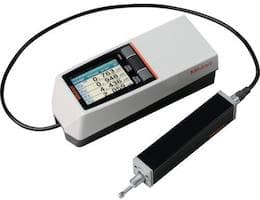
There are two ways of qualifying an electropolished finish. However one way is destructive the other is not. As far as reflectivity is concerned ,there does not seem to be criteria for that in particular.It would be safe to say that the smoother the finish the more reflectivity is going to be. So using a profilometer to measure the surface smoothness will give you a unit of measure to set your parameters by. For instance you could say that an 8 micro inch finish prior to electropolish will give you satisfactory results but a 12 would not.
Secondly chemical analysis would be your only other option. It is destructive in nature and is quite expensive. It does serve a purpose in developing the optimum time, temp and voltage required in the process. You certainly would not want to use this method of testing any more than necessary. That test is called ESCA, or Auger.
Well I won't go into that but if you have any questions I can help with ...
Fountain Valley, California
2001
Q, A, or Comment on THIS thread -or- Start a NEW Thread