
| Search our quarter-million Q&As |
Home of the finishing HOTLINE since 1989
-----Cyanide Disposal/Destruction methods
Q. Hello, in my lab we have some aqueous potassium cyanide solution (about 1L) and we're trying to destroy it.
What would be the best/ safest way of doing this.
- Rhode Island
February 23, 2023
This is a meeting place for camaraderie & sharing, not a free consultancy. So some readers don't engage with anonymous posters.
A. Hi Matt. The 'safest' way would be to call a hazardous waste destruction company but that would be expensive.
The most traditional and simplest way to deal with potassium cyanide and other cyanide wastes is alkaline chlorination. This involves keeping the pH at about 11.0 (the reaction gets horribly slow below pH 10.5) and adding bleach
⇦ in bulk on
eBay
or
Amazon [affil link]
.
I would suggest doing this behind a lab hood on a magnetic stirring machine at a very slow speed. Add a stochiometric quantity (or your best guess) of bleach and allow 15 minutes. If potassium iodide
starch paper
[affil link] does not turn blue, you have no excess bleach, meaning you still have cyanide. Re-check pH, adjust if necessary, and add more bleach. When the
starch paper
[affil link] is blue after a few minutes of mixing, excess chlorine remains, and the cyanide has been destroyed (turned into cyanate).
(affil links)
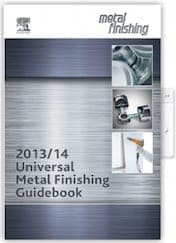
free pdf is currently available from academia.edu
So I think my preference under the circumstances (under 1 liter in a school) would be to put the cyanate down the sewer rather than suggesting the acidification of the waste. I think it is probably legal for a school to do this chemical reaction and disposal without a specific permit but I'm not sure.
Further information on this topic can be found in the Metal Finishing Guidebook and other industry textbooks. As always, don't proceed directly based on what you hear on the internet, but use this only as an introduction and guide regarding where to find authoritative printed info.
Luck & Regards,
Ted Mooney, P.E. RET
Striving to live Aloha
finishing.com - Pine Beach, New Jersey
Need quick confidential answers? $25
Need project assistance? $100/hr.
⇩ Similar, related, Q&As -- oldest first ⇩
Q. In my laboratory I have a flask containing 100 grs. of potassium cyanide that broke its cover. I want to destroy that cyanide to throw it away but I don't know how to do it. Can you help me?
Ana Honório- Coimbra, Coimbra, Portugal
2004
A. It's best to be trained in this, and it's also considered inadvisable to neutralize concentrated cyanides because of the generation of cyanogen chloride; but assuming you have lab skills and a lab hood, this one is not difficult. Slowly add bleach (sodium hypochlorite, NaOCl) while stirring. Have caustic soda ⇦liquid caustic soda in bulk on Amazon [affil link] on hand (sodium hydroxide, NaOH) and add it is necessary to keep the pH above 10.5. Proceed slowly and carefully. When starch paper [affil link] (potassium iodide) turns dark blue, indicating an excess of bleach, the amenable cyanide will be gone, converted to cyanate.
Next, it's best to oxidize the cyanate to nitrogen and carbon dioxide. This takes time, more bleach, and careful pH control, held at 8.5.
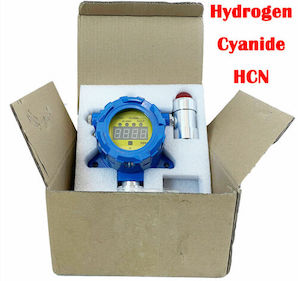
Accidental or inadvertent acidification of cyanide releases poisonous hydrogen cyanide gas, so you need pH instrumentation that works well.

Ted Mooney, P.E.
Striving to live Aloha
finishing.com - Pine Beach, New Jersey
Need quick confidential answers? $25
Need project assistance? $100/hr.
A. Best disposal method is to sell that 100 g of KCN to needy people in industries.
Regards,
PKM Dinesh- Chennai, India
 Exactly, PKM. Thanks for saying it.
Ted Mooney, P.E.
Striving to live Aloha
finishing.com - Pine Beach, New Jersey
Need quick confidential answers? $25
Need project assistance? $100/hr.
Using Oxygen gas for Cyanide oxidation
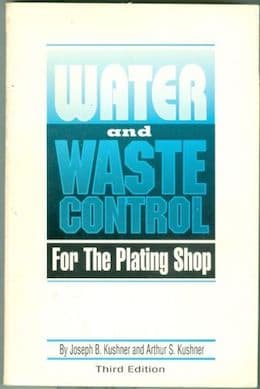
by Kushner & Kushner
(If you can't buy it, try Worldcat for a library which has it).
on Amazon (rarely)
or eBay (rarely)
(affil link)
Q. We are currently looking for ways to lower our chemical costs. We currently use chlorine bleach for oxidation and sodium bisulfite for dechlorination. Is it possible to use oxygen gas, injected into a carrier stream, to oxidize the cyanide in the first stage of the process? The first stage is accomplished in a separate tank from the second stage, where several first stage tanks are combined to second stage.
David M. Shookhelicopters - Grand Prairie, Texas
2006
A. Do not think that O2 will work well at all. It probably will take ozone or peroxide (diluted for safety)
James Watts- Navarre, Florida
A. Oxygen may work some if you also use a UV light.

Paul Morkovsky
- Shiner, Texas, USA
A. Hi
Chlorine gas is less expensive than bleach, but society naturally gets continuously less risk-adverse, so it can be a hard sell.
One captive plating installation I know of tried to "save money" by using chlorine gas, and after the union learned of it, they demanded that the cylinders be kept only in a sealed special laboratory facility with many different types of monitoring equipment, and entered only with SCBA suits ... and the installation, training, & operation cost the company a small fortune :-(
Luck & Regards,
Ted Mooney, P.E.
Striving to live Aloha
finishing.com - Pine Beach, New Jersey
Need quick confidential answers? $25
Need project assistance? $100/hr.
by Clarence Roy
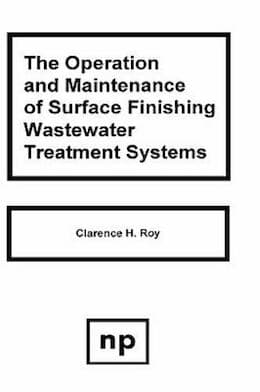
on Amazon or eBay
(affil link)
A. Yes, you can oxidize cyanide with oxygen gas. In fact, you can hydrolyze it with just water. At 50 atm pressure, and 200 °C, that is. There are some proprietary cyanide destruct processes that operate this way, mainly used by centralized waste disposal facilities that treat concentrated cyanide wastes that other people generate.
This is a good example of the "thermodynamics vs kinetics" problem. Whether a reaction *can* occur, and, how fast it *will* occur, are two separate issues.
Another example are the two cyanide treatment chemicals that Mr. Watts mentions - hypochlorite and peroxide. Hypochlorite, or chlorine gas, reacts with cyanide very rapidly at pH 10 - 11.5. It will also oxidize cyanate - with enough chlorine you can take cyanide all the way down to nitrogen gas and carbon dioxide. Peroxide, on the other hand, is slow to react even in the presence of catalysts with cyanide, and will not oxidize cyanate at all. And, it is very tough, under normal conditions, to get the cyanide below about 25 ppm with peroxide alone.
My approach to concentrated cyanide wastes (2 - 5 g/l) is to take the pH down to about 11 with sodium bicarbonate, add copper ions as a catalyst, then peroxide over a period of hours to bring the cyanide down to about 50 ppm. The endpoint of this treatment stage is signaled by a color change to green, as copper is liberated from its colorless cyanide complex. Then, I use hypochlorite to bring it down the rest of the way. The advantages of this are: 1) little cyanogen chloride is generated and 2) the volume of the waste is not increased as much as it would be if hypochlorite alone was used. Peroxide is "stronger" in the sense that it contains more equivalents of oxidizer per gallon.
Hope this is of some help.

Dave Wichern
Consultant - The Bronx, New York
A. I have seen a process described in which you add sodium chloride and then pass a current through two electrodes. Chlorine is produced at the anode and destroys cyanide. To be effective there are several practical details you will need:- Presumably some agitation will be necessary. The anode current density. The anode material, presumably carbon. The pH.
Nick Clatworthy- Whitstable, Kent, Great Britain
Need help with disposal of new unused Sodium Cyanide
Q. Hi, I currently have 5 pounds of unused sodium cyanide. How can I get rid of this safely?
Rick N [last name deleted for privacy by Editor]- Brick, New Jersey [last name deleted for privacy by Editor]
February 24, 2017
A. Hi. If the container is unopened it should be relatively easy to sell it to a jeweler or plating shop. If it's open, it will probably be much harder. You didn't note your qualifications or where you got this, but if you haven't had haz-mat training, and otherwise know your way around a lab, and have a proper lab to work in, you'll need to pay to have it disposed of if you can't sell it. Good luck.
Regards,
Ted Mooney, P.E. RET
Striving to live Aloha
finishing.com - Pine Beach, New Jersey
Need quick confidential answers? $25
Need project assistance? $100/hr.
Sorry! Finishing.com is temporarily Read-Only.
Ted Mooney is retiring but I have several offers to take it over.
We're working hard to make sure we find it the best new home.