
| Search our quarter-million Q&As |
Home of the finishing HOTLINE since 1989
-----Passivation and laser etching of stainless steel

this text gets replaced with bannerText

RFQ: I intend to buy an electro etching machine for stamping our brand name on our produced ball bearings, portable type. I would like to have technical info. in this matter. WBR M.Shoja
MIR SHOJATehran, Tehran, IRAN
2003
Ed. note: This RFQ is outdated, but technical replies are welcome, and readers are encouraged to post their own RFQs. But no public commercial suggestions please ( huh? why?).
Passivating Laser Marked 15-5 PH Stainless Steel Parts
Q. We are manufacturing components made from 15-5 PH Stainless steel for use in some of our aerospace assemblies. They require laser marking and passivating. These parts cannot be submerged in a liquid solution thus require passivating with a cotton or foam swab over the markings. A company has created a liquid solution for us made from water, potassium dichromate, and phosphoric acid. Not sure if this is a viable solution or if there is a more effective process.
Does anyone have any information on passivating 15-5 PH in terms of surface preparation and passivating the laser marked area?
Thanks,
Gary
manufacturing engineer (aerospace engineering) - Wallingford, Connecticut
2004
A. I would look at two other approaches. Check with Stellar Solutions [a finishing.com supporting advertiser]; possibly their citric based gel would be a more practical solution to the problem. Another approach would be to talk to the brush plating companies. At least one has a brush electropolish which looks like it would be a good way.
James Watts- Navarre, Florida
Q. Thanks for your input James, I will look them up.
Gary P [returning]manufacturing engineer (aerospace engineering) - Wallingford, Connecticut
A. Gary, why the heck would these require passivation? The way to do assemblies, as you know, is to passivate the piece parts before you assemble. Unless there's machining on these parts, through which stray iron particles can get onto the surface of the 15-5, then the original passivation is still good.
When we have to machine assemblies, we use carbide tooling or grinding wheels dedicated to stainless steels, or some other such controls to make sure we don't need to passivate again. Mere laser marking will NOT affect the surface such that it'll require passivation again.
Does your company have evidence that laser marking WILL affect 15-5 corrosion resistance? I've never seen such, and we've been laser marking for decades...

Lee Gearhart
metallurgist - E. Aurora, New York
Q. Lee, thank you for your information. Before I started working here, these laser marked parts were sent out for corrosion testing. I'm told the laser marking did corrode, (without passivation over the marking). I think I will run some tests myself. Anyway, the parts are passivated after all machining, except for laser marking due to lot control. I need to rub a passivating solution over the laser marking. Your saying the laser marking has no effect on the original passivated surface, and does not require re-passivating? Does it matter how deep the laser marking is?
Thank you
manufacturing engineer (aerospace engineering) - Wallingford, Connecticut
A. Depending on the type and power of the laser you will normally destroy the properties of the steel due to the high heat of the laser etch. This is a major problem in the surgical and orthopedic industries which has been resolved with the products mentioned above. Many of these assemblies must be laser etched AFTER assembly, and then the laser mark will rust in autoclaving or other disinfecting processes, or in corrosive atmospheres. The weakest part of the device for corrosion will be the laser etch. This is why they use a paste on the laser etch area after assembly, but it must be a product that passivates the etch without totally removing the desired black color.
adv.
Let us know if we can help.


Lee Kremer
Stellar Solutions, Inc.

McHenry, Illinois
Q. I have an application where I am trying to laser etch a dark graphic on 17-4 stainless. After etching, the parts are then passivated in Nitric acid. My problem is that occasionally, the etching looks lighter and blotchy in some areas. The problem isn't consistent part to part or even across the entire part. I've heard differing opinions as to whether passivation should be performed before or after laser etching. Can someone give me a definitive answer as to the proper order of operations? Does anyone know the cause of the problem?
Shawn HeeterMedical manufacturer - Allentown, PA USA
2006
A. You could laser after passivation and thus avoid the problem altogether. Bear in mind, the laser process does not impart any foreign substance to the stainless which would promote corrosion, and passivation is the process used to dissolve ferrous metals from the surface of the stainless steel.
Michael Georgiadis- Durban, South Africa
A. Laser etching areas on stainless steel are indeed more susceptible to corrosion, and passivation treatments do have the tendency to remove the laser mark. What is often done is a full length passivation treatment prior to the laser etch, then a reduced-time passivation treatment after the laser etch. This helps restore corrosion resistance around the laser mark but you can stop short of the point where the mark starts to fade.

Ray Kremer
Stellar Solutions, Inc.
McHenry, Illinois
Lasermarking on 416 Stainless steel
Q. Hello, I use a VersaLaser VL200 with an HPDFO head, for small and finite laser marking on 416 stainless medical tools.
I wanted to know if anyone has laser marked unpainted, unpolished stainless and has some tips or chemicals that they use to best clean the surface in preparation.
Right now I use a commercial solvent, Purple Power
⇦ on
eBay or
Amazon [affil link]
, methanol, then acetone.
I clean my parts in a sonic cleaner with each one of the aforementioned chemicals, one chemical at a time of course. Any critiques on my cleaning process? Suggestions?
Dental tooling manufacturing - York, Pennsylvania, USA
September 10, 2010
Update:
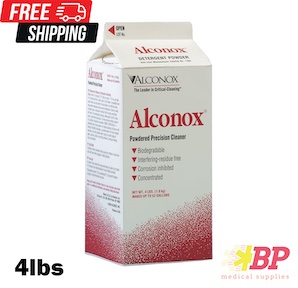
I now boil my pieces in a solution of Alconox ⇨
and water, then sonic-clean in methanol ⇦ on
eBay or
Amazon [affil link]
and sonic-clean in acetone
⇦ on
eBay
or
Amazon
[affil link] Flammable!
. This seems to work better, but with all of the harsher sterilization procedures on the forefront, are there better ways to go about this laser marking preparatory procedure?
- York, Pennsylvania, USA
Multiple threads merged: please forgive chronology errors and repetition 🙂
Which Comes First, Laser Etch or Passivation?
Q. Googling "Passivation" and "Laser Etch" I keep coming to your web site. The comments I read provide informed insights and are quite helpful; but it is not clear in the techniques you or the other contributors advocate whether the etching is being performed before or after passivating. It has become an issue with our customer and I am wondering if there is a collective consensus on which should be the final process step.
Ed SchusslerJune 27, 2011
Surgical Instrument Company - East Hanover, New Jersey, USA
A. Ed,
Passivation is always, always, always, the final step in manufacturing or fabrication of a stainless steel item.
The sticky wicket with laser marks is that many marks are unable to endure the acid bath for the entire length of time needed for passivation. It's always better if the laser setting can be adjusted to produce a more resilient mark, of course, but the more common work-around is to perform a full-length passivation prior to marking, for the sake of the part as a whole, and then a shortened-length passivation after marking, for the sake of the mark itself.
Ray Kremer
Stellar Solutions, Inc.
McHenry, Illinois
Multiple threads merged: please forgive chronology errors and repetition 🙂
How to put black indicator marks on stainless steel
Q. Hi Folks
I am working with some very small diameter (1.54mm) stainless steel 316L tubing. I would like to blacken this stainless steel as an indication marker for a medical device. Any suggestions on the best way to go about this?
Cheers
- Dublin, Ireland
August 8, 2012
A. Hi Fionn.
There are so many ways to blacken stainless steel (black oxide, black chrome plating, anodizing, and paint are a few), that it's hard to eliminate all but one and come up with a suggestion. But if you are talking about blackening just indicator marks, the fastest and easiest may be laser marking. For longest wear, it is preferable to machine indentations into the tubing where you want the markings, to reduce the wear on them and increase their longevity.
Regards,

Ted Mooney, P.E.
Striving to live Aloha
finishing.com - Pine Beach, New Jersey
Need quick confidential answers? $25
Need project assistance? $100/hr.
A. Try stencil etching; you can use ac or dc current -- one of them should give you white etch, the other would give black etch. Good luck

Khair Shishani
aircraft maintenance - Al Ain, UAE
A. I have used etching kits for years to mark 416 and 410 stainless gun barrels. The last couple of years I have been sending them over to a local engraving shop for laser engraving. The results are a million times better. They can make the etching as deep as I want and at the same time they can cut lines that are only a few thousandths of an inch wide. The diversity of pictures and fonts they can create is limited only by the software they have. They can even do custom images on demand. They simply scan them in and out they come. The best part is that it's dirt cheap.

Rod Henrickson
gunsmith - Edmonton, Alberta, Canada
Sorry! Finishing.com is temporarily Read-Only.
Ted Mooney is retiring but I have several offers to take it over.
We're working hard to make sure we find it the best new home.