
 Where the
world gathers for metal finishing
Q&As since 1989
-----
Making a Copper Backsplash; Refinishing a Copper Backsplash
Q. I have old copper wall tile as a backsplash behind my stovetop. Is there any paint I can use to paint over the tile as opposed to trying to remove this ancient tile for decorating purposes?
Patricia Johnson- Danville, Illinois, USA
2002
A. Hi Patricia. It sounds like you want to paint it some color rather than refinishing it as copper. Self-etching primer [on eBay or Amazon] should stick as the first coat; then whatever paint you like. Good luck.
Regards,

Ted Mooney, P.E. RET
Striving to live Aloha
finishing.com - Pine Beach, New Jersey
Q. I want to use hammered copper on my kitchen backsplash but I cannot find a source. Please tell me suppliers of hammered copper sheets or even copper ceiling tiles - I have seen these used in backsplashes also.
Sharon O [last name deleted for privacy by Editor]- Bakersfield, California
2002
A. Hello, Sharon.
You could get the sheet in plain, rather than hammered -- then in letter 34185, the readers tell you how to hammer the pattern yourself. They suggest that it is relatively easy, and better than settling for someone's else's hammer pattern anyway. I haven't tried it myself, and can't predict how good a job you could do.
Good luck!
Ted Mooney, P.E. RET
Striving to live Aloha
finishing.com - Pine Beach, New Jersey
Q. I want to use copper as a backsplash in the kitchen. How can I seal/coat/treat it to keep it from getting stained and to make it easy to clean.
Thanks,
- Placerville, California
2002
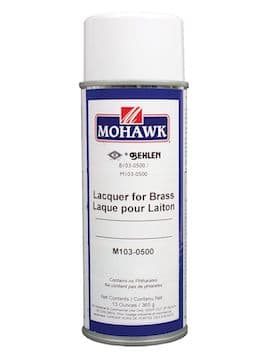
Brass Lacquers
on
eBay
or
Amazon
(affil links)
A. Hi Roberta. Brass lacquers are available from specialists like G.J. Nikolas [a finishing.com supporting advertiser]. If you just need a spray can or two, it's available on line from Amazon.
Regards,
Ted Mooney, P.E. RET
Striving to live Aloha
finishing.com - Pine Beach, New Jersey
Q. Hello;
I am looking for hammered Copper sheet metal to build a vent hood out of. Please provide any Info you might have.
Thanks,
hobbyist - BAXLEY, GEORGIA
2004
Q. I am remodeling my kitchen. Many of the accents are copper (faucet, cabinet pulls). I would like to put up a copper backsplash rather than tile. I assume it would be copper sheeting. I would like to do the whole backsplash area. It would be about 40 square feet. Has any one done this before and if so, do you have suggestions about where to start? (what gauge of copper sheeting, how to adhere it to the wall, any design hints, are there fabricators who work with this type of project, should I polyurethane it? ) Any help on how to begin with this project would be appreciated.
Thank you,
homeowner - Evanston, Illinois
2004
A. Hi Nancy. I put up two-foot square metal tiles as a backsplash in my kitchen. However, I used powder coated steel rather than copper sheet. Liquid Nails worked. Lacquer is designed specifically for copper and brass products, and may prove more satisfactory than polyurethane (plus it's easily removable). Good luck.
Ted Mooney, P.E. RET
Striving to live Aloha
finishing.com - Pine Beach, New Jersey
Where to find Copper raised fleur de lis tile
I bought 3 copper fleur de lis raised tiles for the backsplash behind my stove top. The designer tile store I purchased them from has since closed. I am building a new house and want to use the same copper raised fleur de lis tiles and I can't seen to find a vendor. Can anyone share possible leads?
Anita Willardhomeowner - Atlanta, Georgia, USA
2005
A. Check on the tiles to see if there are any marks identifying the manufacturer. If not you can make clay castings of the tiles and use a copper glaze.
Marc Banks- Elizabeth City, North Carolina
2005
A. Check out www.azhotdots.com for metal tiles.
Neil BellRed Sky Plating

Albuquerque, New Mexico

2005
A. Try "Manhattan Interior Designs".
Diana Saussaye- Harahan, Louisiana USA
2005
"Metalwork for Craftsmen"
on
AbeBooks
or
Amazon
(affil links)
Q. I am trying to put up individual metal tiles behind my kitchen range. I am trying to use liquid nails but the tiles fall down. Do I need to put the liquid nail on the tile and let it sit for a few minutes before putting it on the wall or am I using the wrong adhesive?
Shirl Colemanremodeler - Williamsburg Kentucky
November 10, 2009
A. Hi, Shirl. I used 2' x 2' tiles, so they all rested on the counter top, and the limited stickiness of the uncured Liquid Nails was enough to hold them in that case. But I understand the problem with smaller tiles. My kitchen project was 3 years ago so the memory isn't fresh, but I think it's supposed to be at least a little tacky before you put the tile on the wall.
There are adhesives like contact cement that will hold, but they have the disadvantage of grabbing permanently, almost instantly. I can't say what's best because of such limited experience, but the tile manufacturer may have a suggestion. Good luck.
Regards,
Ted Mooney, P.E. RET
Striving to live Aloha
finishing.com - Pine Beach, New Jersey
November 10, 2009
A. Nancy. I have experience with copper backsplash using both a thin 36 gauge copper and a standard 16 oz. (24 gauge) copper. With the thin copper, we use 1/4" MDF for the substrate and contact cement to adhere the copper to it. Then we adhere the MDF to the wall using construction adhesive. It works great. We even make trim pieces wrapped with the copper. The heavier 24 gauge copper can be cut with hand shears and adhered directly to the wall with construction adhesive. You can cut the wall outlets with a Dremel [on eBay or Amazon] or RotoZip [affil links]. We always use lacquer for a good protection and usually spray a few coats.
Don AngeloSpring Hill, Tennessee
March 13, 2010
Refinishing copper tile on the wall
Q. About 10 years ago I installed about 30 sq.ft. of 6" x 6" copper tile as a kitchen back splash. It had a lacquer finish and looked beautiful. Over time, of course, in spite of never scrubbing with abrasives, much of the tile is showing oxidation spots, especially around the cook top. If I could get a ceramic tile which looked as good I might replace it. But I have searched in vain. So am now seriously considering the refinishing option. I have also looked in vain for internet info regarding doing this. There is some info on refinishing copper objects. But I have found nothing on tile, much less tile on the wall.
If anyone out there has had any experience doing this, I'd greatly appreciate benefiting from their wisdom.
Home owner - Holualoa, Hawaii
August 19, 2015
John,
Usually I get people contacting me for something to remove tarnish from their brass bed (there are a few old threads here on finishing.com about it, like letter 13396), but this is the first one I've seen for kitchen tile. However, the same approach ought to work. Obviously the remaining lacquer has to come off, then the oxidation can be addressed using a citric acid based product. Finally, you will probably want to apply a new lacquer coating.

Ray Kremer
Stellar Solutions, Inc.
McHenry, Illinois

August 31, 2015
Q. Thanks for your response, Ray. Glad to know citric acid can remove the oxidation. I'm not sure about the best lacquer remover, though I expect a "natural" paint remover [on eBay or Amazon] would do the trick. I was hoping to get some ideas on working with those liquids on a vertical surface, which could get pretty messy if too runny. And I was hoping for a suggestion on a more durable replacement finish.
John Bertrand [returning]- Holualoa, Hawaii
September 1, 2015
Q, A, or Comment on THIS thread -or- Start a NEW Thread