
| Search our quarter-million Q&As |
Home of the finishing HOTLINE since 1989
-----Hard Anodize Problem. 2XXX Aluminum Burning
Quickstart:
Readers may wish to get up to speed by reviewing our "Introduction to Anodizing". 'Hard anodizing' or 'Hardcoating' is a variation on anodizing where the coating is made more abrasion resistant, and usually thicker, by anodizing at a lower temperature, higher voltage, and for a longer time.
It is difficult to anodize high copper alloys like 2014 and 2024 because only the aluminum can anodize. And this problem is greatly amplified when we attempt to hardcoat such alloys.
Q. Hello my name is David and been doing hard anodising for 38 years. Our hard anodising pulse rectifier decided to give up so the company bought a new rectifier which is different from previous rectifier and 7 months in and still unable to do copper alloy we run 14% sulphuric acid solution, operatopn temperature at -5. On the rectifier we have set point 1 amps and set point 2 amps and with have pulse which I run 15 milliseconds on and 15 milliseconds off but no base line which we had on the other rectifier and we don't put additives in our sulphuric solution we run at 24 ASF with loads of different settings and 2024 & 2014 just keeps burning. Any help would be appreciated thanks
David GraftonHard anodising supervisor - England
July 2, 2025
A. Hi David.
When you've done decades of successful processing, and then things stop working, it's much easier to figure out what has changed than to start over, so I would urge you to not change too much 🙂
And because you have so much process-related knowledge, it might be best to consider things that are not a direct part of the electrochemistry ...
Are you sure that the air agitation
⇦ huh?
(or sparger agitation) has not changed significantly? A great deal of localized cooling is required for hard anodizing. Are you sure that downtime related to rectifier changeover didn't introduce poor rack, workbar, or saddle contacts such that you're suffering voltage breakthrough after the ramp up?
If nothing that has been recorded changed, are you certain that the previous thickness you were obtaining matches what you are now shooting for?
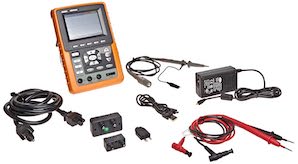
It is rather a mystery. Can you check the voltage with an oscilloscope to make certain that the rectifier isn't single-phasing or suffering some other defect? These days high end digital electrical V-O-M multimeters can display oscilloscope traces.
Luck & Regards,

Ted Mooney, P.E. RET
Striving to live Aloha
finishing.com - Pine Beach, New Jersey
Need quick confidential answers? $25
Need project assistance? $100/hr.
Q. Hi ted thanks for the reply the only thing that changes and is totally different is the rectifier to the previous one where the old one had a base at 34% that gave you a constant current of 34% of the full load while it was pulsing and this new rectifier we have doesn't have this or amp-hr meter to time loads. All contacts are new, solutions are new as well. I have tried everything, taken advice from here with no success
David GraftonHard anodising supervisor - Uk
A. Hi David,
I know your company very well; if Arron can't sort it out, then it must be a conundrum!
Good luck, an that.
electroplater - uk
This is a meeting place for camaraderie & sharing, not a free consultancy. So some readers don't engage with anonymous posters.
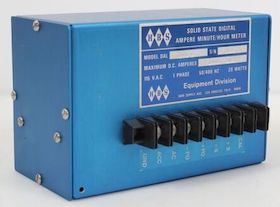
A. Hi David. You can buy a separate Ampere-Hour meter -- that problem is easily solved.
But if you were able to successfully hardcoat these difficult to anodize alloys only by using a rectifier that had a pulsing profile you can no longer generate, that's quite a problem. You might try to contact Ann Deacon Juhl for advice if you haven't already -- she has specializing in pulse anodizing for about 38 years 🙂
Luck & Regards,
Ted Mooney, P.E. RET
Striving to live Aloha
finishing.com - Pine Beach, New Jersey
Need quick confidential answers? $25
Need project assistance? $100/hr.
A. Hello David
It seems to me that for hard anodizing high copper alloy, your sulfuric concentration is rather low. My recollection is that it should be somewhere near the 18- 20% range. I am thinking that 14% is much closer to the norm for type II anodizing. I am not able to address pulse anodizing as this is not within my scope of experience.
Retired - Newport Tennessee
July 4, 2025
A. I would drag the bottom of your tanks to be sure whether an older part or material that is in the tank is causing the burning
David HendrickFormer metal finishing with Smithsonian Air & Space Museum - Fulshear, Texas
December 7, 2025
Ed. note: Excellent idea!
A. Hello David.
Opportunities such as you have are the thing that kept me coming back to the job every day aside from enjoying my job as much as i did. (35 years of doing battle). What worked yesterday does not work today. I would make this suggestion to you. Look backwards and not forward or to the present. I responded back in July that 2000 series aluminum needs a sulfuric concentration of near 20 per cent to prevent burning.
Your old rectifier gave out on you so you purchased a new one. Maybe that was the problem. You were not attaining proper current to your parts (anodizing more slowly) so the acid concentration was not an issue. Now with this new baby, things are happening how they are supposed to and this is foreign to you. It is kind of like your old rectifier was training you incorrectly and nobody knew any different so you all just kind of went with it and the experience you were gaining caused you to build on a faulty foundation.
I can tell you from experience, a less than 20% concentration for 2000 series aluminum is going to lend itself to burning. The proof is in plain sight. If you see that 3000, 5000 and 6000 series aluminum are processing fine with no burning and 2000 series is burning, it tells you something is wrong with your process, not the rectifier.
You can process other alloys in a tank with higher concentration, but you should not process 2000 series in a tank with lower acid concentration. 14% sulfuric is a great solution strength for type ll anodizing including 2000 series but it does not work so well for hard coat. If you have the space or multiple processing tanks, it would be beneficial to convert one of your tanks to the higher sulfuric concentration and process your 2000 and possibly your 7000 series in said tank.
Keep fighting the good fight.
Retired after 35 years - newport, tennessee usa
December 8, 2025
Multiple threads merged: please forgive chronology errors and repetition 🙂
Q. I would appreciate any help/information in regards to hard anodizing 2024 T3 aluminium to MIL-A-8625 / MIL-PRF-8625 [⇦ this spec on DLA] Type III black.
We are having a problem on some specific parts in which we are attempting to get a minimum of 1.2 mil applied to a bore on a machined part. The part is 5.000 inches OD by 4.250 inches long with a bore diameter that has steps in it from 1.9750 inches to 2.120 inches. Our tank temperature is 57 °F, aluminum content 1.0 , bath concentration 25.9 oz. per gallon. We were applying 16 volts with a initial amperage of 1100 amps.
Richard Johnson1998
A. Sir,
2024 is a high copper alloy & cannot be hardcoated in conventional hardcoat systems. Here in our facility we use 2 different hardcoat systems, Martin HC & Imperv-X HC. Martin will process most alloys BUT NOT high copper ones. The Imperv-X system is specifically designed for high copper alloys and we hardcoat them daily with no problems.
David A. Kraft- Long Island City, New York
A. Richard,
Your information is not complete which makes an answer difficult or at least requires assumptions to be made which is not good.
Al 1.0 oz/gal or g/l or ? Sulfuric Acid ounce by weight or fluid ounce?
Normal hard anodize is 32 °F. Are you using a proprietary or an additive? Straight DC or superimposed AC or pulse?
The high copper content in your alloy makes the anodizing more difficult, but you should be able to get 1 mil.
If your final voltage is 16, you are hard pressed to call it type III anodize, and 1 mil will be very hard to get.
Include all of the process variables and it will be easier for people that are more knowledgeable than me to help you.
Jim
James Watts- Navarre, Florida
A. Your processing parameters are more appropriate for an anodize than a hardcoat. I doubt that this coating would meet the minimum wear requirements for a Type III hardcoating per MIL-A-8625. This could be contributing to your difficulties in achieving the desired thickness. Typical hardcoat anodizes utilize higher voltages and current densities with lower solution temperatures. The trade-off for these harder, thicker coatings is an increased tendency for "burning", particularly in the 2XXX series alloys. Special procedures and process controls can help minimize this phenomenon. Also, proper design and placement of auxiliary cathodes will help with coating uniformity.
Chris Jurey, Past-President IHAALuke Engineering & Mfg. Co. Inc.

Wadsworth, Ohio

Q. Dear Readers,
Hello. I am a searcher about "hard anodizing in ambient temperature". Please if you have a article or book about this, send me.
Thank you,
Mehdi Khandan- Qom, Iran
2002
Treatment &
Finishing of
Aluminium and
Its Alloys"
by Wernick, Pinner
& Sheasby
on Amazon or eBay
or AbeBooks
(affil link)
A. Hi Mehdi.
Ambient temperature hard anodizing is not true hard anodizing, so some people call it Type 2-1/2 anodizing. It doesn't operate at freezing temperatures, but I don't think it's truly ambient, maybe more like 50-60 °F (10-15 °C). These processes are difficult and almost surely require proprietary additives. If you don't have access to such, it's probably better to lower the temperature to freezing, although Robert Probert can probably consult on non-proprietary additives.
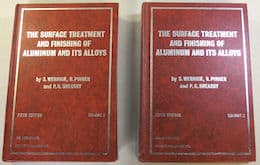
By far the most complete reference to every type of anodizing is The Surface Treatment & Finishing of Aluminium and Its Alloys ⇨
It's a large, expensive, 2-volume book ... but hopefully there's a copy in a public or university library. It covers everything you can imagine .
Regards,

Ted Mooney, P.E.
Striving to live Aloha
finishing.com - Pine Beach, New Jersey
Need quick confidential answers? $25
Need project assistance? $100/hr.
⇩ Similar, related, Q&As -- oldest first ⇩
Aluminum How-To
"Chromating - Anodizing - Hardcoating"
by Robert Probert
You'll love this book. Finishing.com has sold a thousand copies without a return request 🙂
Q. Hello my name is Jake Allen and I am 21 years old. I work for a plating shop in Grove, Ok.
We have recently been sent parts that are 2124 aluminum. The parts are to be hard coated. We have attempted to process a few and some of them come out ok but we have had a few burn. We have good contact and our acid and alumina content are good. Our sulfuric content is 360-390 g/l and alumina is around 7 g/l.
We have tried slowing ramp time and still receive the same results. I would appreciate any help. ⇦ Answer?
Thank you,
plating shop employee - Grove, Oklahoma, USA
July 16, 2009
Multiple threads merged: please forgive chronology errors and repetition 🙂
Q. Whether aluminium Al2014 grade is compatible to hard anodizing? Or it requires some special chemicals & change in process?
Santosh PatilBuyer - India
March 8, 2010
A. Hi
2014 is copper Aluminum Alloy, which may give burning problem, may not support much for hard anodizing (Sulfuric Acid electrolyte), where you need higher current density.
- Chennai, India
Multiple threads merged: please forgive chronology errors and repetition 🙂
Q. Hello,
I'm French and I try to treat parts as hard anodizing current pulse on a 2024 alloy.
Can you give me informations on the ramps of anodized for this alloy ?
Cordially
Research and Development - Saint-Etienne, France
May 4, 2011
A. 2024 and especially heat treated 2024 requires higher free acid, try 220 gm/L, then maybe 230 gm/L, let us know.
Always ramp 15 minutes up to a pre-determined 24 amps per square foot amperage then switch over to current control and let the voltage climb as the resistant thickness builds.

Robert H Probert
Robert H Probert Technical Services
Garner, North Carolina

Q. HELLO
MY NAME IS ALI, I WORK ON HARD ANODIZING ON PARTS MADE OF 2024 ALUMINUM. I HAVE A PROBLEM WHEN CARRYING HARD ANODIZING IN END TIME IN HIGH VOLTAGE (45-50 V). CURRENT SUDDENLY GOES HIGH AND PART IS BURNING. PLEASE GUIDE ME.
ANODIZER - ESFAHAN, IRAN
August 29, 2011
A. Hi, Ali.
In my rather limited experience in that area, this is usually caused by poor contact. What happens with poor contact is that the item initially gets little or even no anodizing thickness, then as the voltage goes higher, it breaks through whatever resistance was on the contact surfaces; the thinly anodized or non-anodized parts subjected to 45-50 V causes large currents, which immediately causes burning.
Regards,
Ted Mooney, P.E.
Striving to live Aloha
finishing.com - Pine Beach, New Jersey
Need quick confidential answers? $25
Need project assistance? $100/hr.
Q. Hello,
I'm working on a project that requires 2024 aluminum to be hardcoat anodized and yield a final hardness of 300HV. After many trials I have not been able to achieve the hardness, but wear data and thickness requirements are acceptable. Any suggestions?
- USA
June 7, 2013
A. How are you measuring hardness? When Reynolds published their first work on the glycolic/glycerin additive they got a average of 320 and a max of 365 Knoop on 2024-T3 at 1.8 mils and avg. 347 and max of 376 Knoop at 2.3 mils. So 300 is attainable. Be reminded that the Knoop diamond comes in on the cross section -- if close to the bottom of the thickness where the pore is small it gets a higher thickness, but when it comes in near the top of the inverse taper pore, it crunches and shows a lower thickness.
Now for ways to get a smaller pore (read harder): lower temperature, lower free acid, higher current density, and 4%/vol of a 50/50 glycolic/glycerin additive. Note also that all other allows get harder than the 2000's.
Robert H Probert
Robert H Probert Technical Services
Garner, North Carolina
Q. Hi,
Thank you for the nice article, but my main question is, why does the 2024 or 2011 alloys have tendency to burn in hard anodizing process?
What is the scientific reason behind it?
Does it have to do anything with the Electrical resistivity or conductivity of the alloy?
Best Regards,
Payam ⇦ Answer?
- Bielefeld Germany
March 29, 2018
Sorry! Finishing.com is temporarily Read-Only.
Please maintain your bookmarks! Although Ted Mooney is retiring, finishing.com is not!
It will have a new owner/curator very shortly!